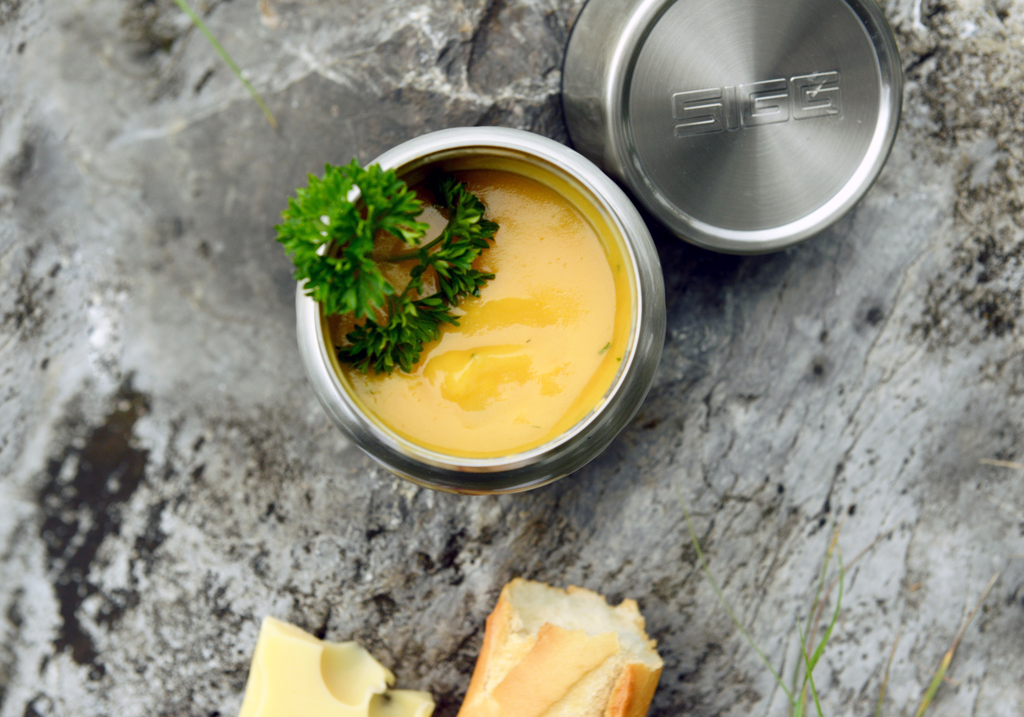
Leak-Proof Lunchbox
Whether it’s soup for lunch at the office, yogurt with fruit as a snack, or a fresh salad with vinaigrette—nothing is more frustrating than a soaked bag and a ruined meal. The solution lies in a container specifically designed to reliably keep liquids inside. High-quality silicone seals, combined with sturdy closure mechanisms and dimensionally stable materials like stainless steel or Tritan, create a barrier that withstands even the jolts of transport. This makes it possible to take a much wider variety of healthy, homemade meals with you and avoid single-use packaging.
Material Comparison: Stainless Steel, Tritan, and Their Leak-Proof Properties
The choice of material has a decisive influence on the functionality and durability of a leak-proof lunchbox. Stainless steel is a leading option here, known for its exceptional durability and hygiene. 18/8 stainless steel, a high-quality alloy of chromium and nickel, is rust-resistant, tasteless, and does not absorb odors. This is particularly advantageous when transporting both strongly spiced curries and mild dishes like fruit salad. A key advantage for leak-proof performance is stainless steel’s dimensional stability. The material does not warp even at high temperatures, which means the lid always closes with a precise fit and the seal can apply even pressure. This constant contact pressure is essential for preventing liquids from seeping out. Stainless steel containers are also extremely durable and resist dents and scratches better than many other materials, making them a sustainable investment. Cleaning them is straightforward, as they are usually dishwasher-safe.
Another advantage is their cooling performance: Pre-chilled foods stay fresh longer in a stainless steel container, especially in double-walled, insulated models. The range of modern food containers includes a wide selection of shapes and sizes that take advantage of this material’s benefits. Tritan has established itself as an alternative to stainless steel. This high-quality plastic is completely free of BPA (bisphenol A) and other plasticizers.
Its greatest advantage lies in its light weight and transparency. You can see at a glance what’s inside the container without having to open it. Despite its light weight, Tritan is exceptionally shatter- and impact-resistant, making it a safe choice for everyday use, even for children. In terms of leak resistance, Tritan also offers high dimensional stability comparable to that of stainless steel, ensuring a reliable seal.
Tritan is also odorless and tasteless and is less prone to discoloration than conventional plastics, although strongly pigmented foods like tomato sauce or turmeric can leave traces over time. Most Tritan containers are dishwasher-safe, which makes cleaning much easier. The choice between stainless steel and Tritan therefore depends heavily on personal priorities: Those seeking maximum durability, longevity, and the best hygienic properties should opt for stainless steel. Those who, on the other hand, value light weight and transparency will find Tritan to be an excellent and safe alternative.
Sealing Systems and Closures: The Key to Leak-Proof Performance
A lunchbox can be made from the best material—but without a well-designed sealing and closure system, it will never be reliably leak-proof. The crucial element is the seal, which is almost always made of silicone. Silicone is a synthetic polymer that boasts a range of ideal properties.
It is flexible and adapts perfectly to the contours of the container and lid, compensating for even the smallest irregularities. At the same time, it is extremely temperature-resistant and remains elastic and functional whether used with ice-cold food from the refrigerator or hot soups. In addition, silicone is food-safe, BPA-free, and hardly absorbs any odors or flavors, which is crucial for hygiene.
In high-quality lunchboxes, the silicone seal is often removable, which allows for thorough cleaning and prevents the growth of mold or bacteria in the grooves. The quality of the seal is evident in its thickness and profile; a wide, lip-shaped seal provides a larger contact surface and seals more effectively than a simple, thin ring. The closure mechanism works hand in hand with the seal. Its job is to press the lid against the body of the box with sufficient and, above all, evenly distributed pressure so that the silicone seal can do its job. There are various systems available, each with varying degrees of effectiveness. Simple click-lock closures, such as those found on basic food storage containers, often apply pressure at only a few points and are prone to leaks when the contents are very liquid or when the container is shaken.
Significantly superior are sturdy clamp or lever lids, which are usually attached to two or four sides of the container. These lever mechanisms generate high contact pressure that is distributed over a large area and pulls the lid tightly against the container. Such systems are the gold standard for absolutely leak-proof containers that can safely transport even soups or sauces. Another very secure option is screw-on lids, which are primarily found on round containers. The thread ensures continuous and strong pressure on the seal, making this method particularly reliable. When purchasing, make sure the lids appear sturdy and are easy to operate, but not so loose that they could accidentally open in your bag.
The Right Size and Compartment Layout for Different Meals
A lunchbox’s leak-proof design isn’t just about preventing leaks to the outside—it’s also about keeping different food items separate inside the box. A well-thought-out compartment layout is crucial for maintaining the quality and enjoyment of the meal. Nothing is less appetizing than a sandwich that’s been soggy from the fruit salad next to it, or crisp crackers that have lost their texture from contact with a dip.
Modern lunchboxes, often referred to as bento boxes, solve this problem with built-in dividers or separate, removable inserts. These compartments create distinct zones for different parts of the meal. In the most advanced models, even the internal dividers have their own silicone seals. This makes it possible, for example, to carry a liquid dressing in one compartment next to a dry leafy salad without the two mixing. The choice of size and layout depends directly on your eating habits.
For a simple meal like a large portion of pasta or a stew, a box with a single, large compartment is sufficient. However, anyone who wants to take a balanced meal with a main course, a side dish, and a small dessert or snack will benefit greatly from a box with two, three, or more compartments. Typical configurations include a large compartment for the main course and one or two smaller compartments for side dishes such as vegetables, rice, fruit, or nuts.
Some systems even offer small, round containers with their own lids that fit perfectly into one of the compartments and are ideal for yogurt, dips, or sauces. Modular and stackable systems offer even more flexibility. Here, multiple individual containers can be stacked on top of one another and secured with a shared carrying strap or clasp. This allows you to transport hot and cold foods separately—for example, hot soup in the lower container and a fresh salad in the upper one. When purchasing, be sure to check the volume in liters or milliliters to ensure the box offers enough space for a satisfying portion without being unnecessarily bulky.
- Checking the seal: The silicone seal must be seamless, clean, and free of cracks, and it should be removable for cleaning if necessary.
- Lid stability: The lids should be sturdy and press the lid firmly into place without the risk of accidental opening.
- Material certification: Ensure that the container is made of food-safe materials such as 18/8 stainless steel or BPA-free Tritan.
- Dishwasher and Microwave Safety: Check the manufacturer’s specifications to confirm whether the container (and its components) is suitable for the dishwasher or, if applicable, the microwave (does not apply to stainless steel).
- Practical test with water: Before using the container for food for the first time, fill it with water, close it, and shake it to test its leak-tightness.
Care and Maintenance for Long-Lasting Leak-Proof Performance
Purchasing a high-quality, leak-proof lunchbox is the first step; proper care is the second—and equally important—step to ensure it remains functional for years to come. A lunchbox’s leak-proof performance depends largely on the condition of its silicone gasket and the cleanliness of the lid and container rim. The lunchbox should be thoroughly cleaned after each use. Many models made of stainless steel and Tritan are dishwasher-safe, which simplifies cleaning.
However, it is recommended to wash the silicone gasket—if it is removable—separately by hand. In the dishwasher, high temperatures and harsh detergents can cause the material to become brittle over time. More importantly, food particles and moisture can accumulate under the seal, which aren’t always completely removed by the dishwasher.
This can lead to the growth of mold and bacteria, which are not only unhygienic but can also damage the gasket and cause unpleasant odors. Manually cleaning the seal and the groove in which it sits with warm water and mild dish soap is therefore the best way to ensure hygiene and longevity.
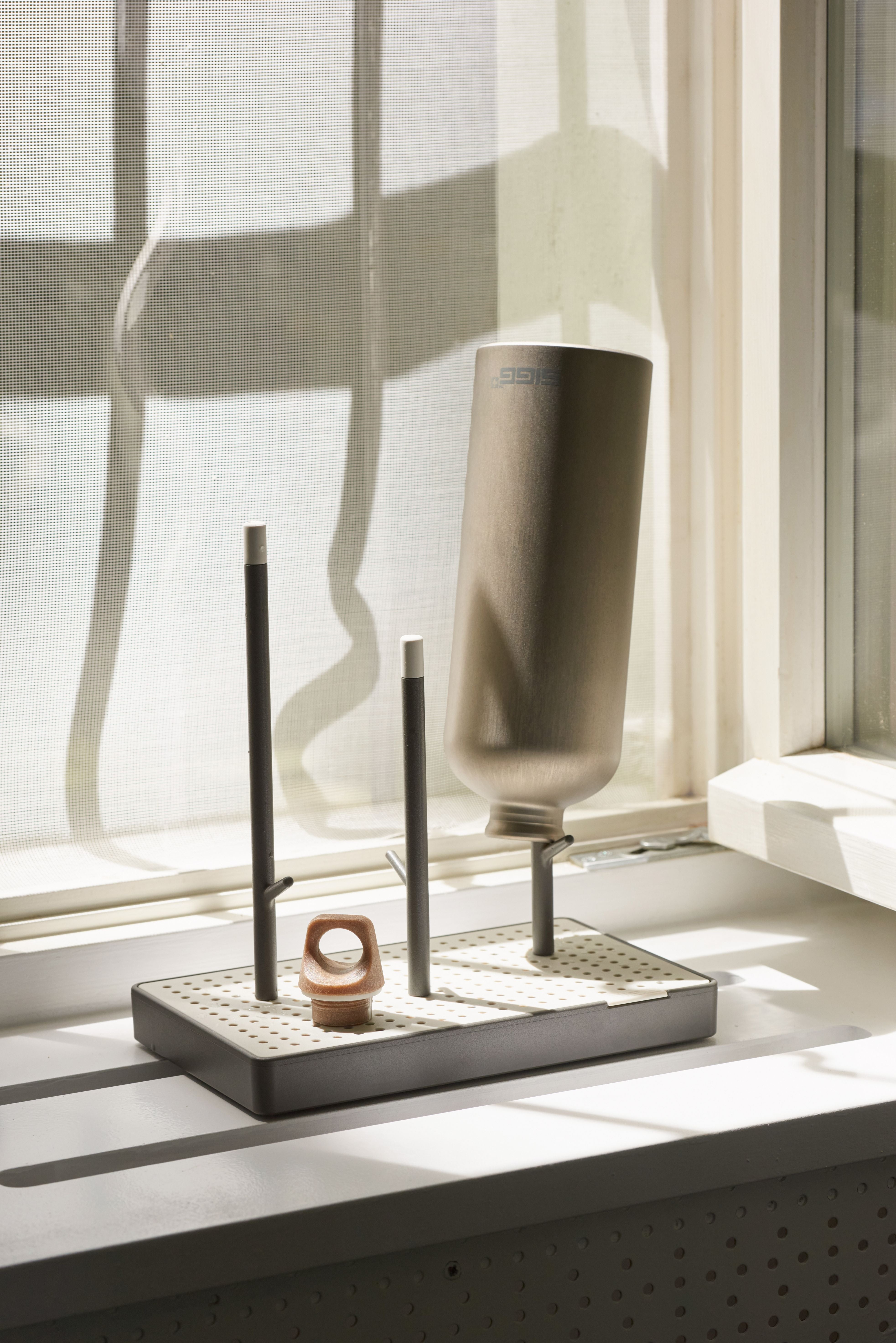
After cleaning, all parts—especially the silicone gasket and the hard-to-reach grooves—should be allowed to air dry completely before the box is reassembled and stored. If the parts are reassembled while still damp, a musty odor can develop quickly. Ideally, the lunchbox should be stored in an open state so that air can circulate and any residual moisture can escape. This also prevents the seal from being permanently compressed, which helps it retain its elasticity for longer.
It’s a good idea to inspect the seal from time to time. Check for cracks, brittleness, or permanent deformation. If any damage is found, the box is no longer reliably leak-proof.
We value durability and offer replacement gaskets for many of our products. Replacing a defective gasket is a cost-effective and resource-efficient way to restore the lunchbox to full functionality, rather than having to replace the entire product.
Practical Tips for Use: From Filling to Transport
Using a leak-proof lunchbox correctly in everyday life maximizes its performance and prevents unpleasant surprises. There are a few things to keep in mind when filling the lunchbox. If you’re adding very hot foods, such as freshly cooked soup or stew, it’s best to let them cool for a few minutes before closing the lid.
If you fill the box with piping-hot food and close the lid immediately, the air inside cools down and contracts. This creates a strong vacuum that can suck the lid tightly shut, making it much harder to open later. In extreme cases, the vacuum can even put strain on the seal or cause the lid to bulge slightly inward. Allowing the food to cool briefly to room temperature prevents this problem. Additionally, the container should not be overfilled to the brim.
Leaving a small amount of space at the top ensures that the lid can close properly and that the contents do not press against the seal, which could impair its function. When it comes to transport: Even the best leak-proof lunchbox should be transported upright whenever possible, especially in backpacks or bags containing many other items. Although it is designed to remain leak-proof even when lying on its side or upside down, transporting it upright minimizes the strain on the seal and closure.
This is a simple precaution that further enhances safety. For particularly sensitive contents, such as a thin soup, it may be wise to place the lunchbox inside a reusable bag as well. This provides a second barrier in the unlikely event of a leak caused by an improperly inserted seal or an accidentally opened closure. Before closing the lid, it’s advisable to take a quick look at the rim of the box and the gasket. Small food particles, such as a grain of rice or a herb leaf, can compromise the seal. A clean rim and a properly seated gasket ensure worry-free transport.
Conclusion
A reliably leak-proof lunchbox is far more than just a container for carrying food; it ensures a clean bag, an appetizing meal, and a more sustainable lifestyle. The key factors for absolute leak-proofness are the synergistic interaction of three components: a dimensionally stable material such as stainless steel or Tritan, a flexible, high-quality silicone seal, and a robust locking mechanism that ensures consistent contact pressure. While stainless steel excels in durability and hygiene, Tritan offers a lightweight and transparent alternative.
The addition of well-designed compartments that prevent food from mixing further enhances its utility. But even the best technology is only as good as how well it’s cared for. Regular and thorough cleaning—especially of the removable seal—as well as proper handling during filling and transport are essential to maintaining functionality for years to come. Quality standards of this kind are recognized internationally, which is also reflected in the product lines tailored to different markets.
Investing in a high-quality product like this not only prevents everyday hassles but also actively helps reduce waste from single-use packaging.