
What is the healthiest water bottle?
The healthiest water bottle is the one that keeps your drink fresh, doesn’t burden your body, and motivates you to drink regularly over the long term. Health here doesn’t come from marketing promises, but from material purity, functional design, and consistent use. A water bottle is used daily and repeatedly—which is exactly why its quality has a direct impact on your well-being.
Not every water bottle meets these requirements equally well. If you look more closely, you’ll notice clear differences.

Health starts with the material
The material is the most important factor in assessing a water bottle’s impact on health. It determines whether substances leach into the drink, how stable the taste remains, and how hygienic the bottle stays over the years. Temperature, the drink’s acidity, and mechanical stress play a central role in this.
For over 110 years, SIGG has relied on materials that have proven themselves scientifically and practically and remain durable even with intensive use.
Stainless steel
From a health perspective, stainless steel is one of the safest materials for water bottles. It is chemically stable and does not react with water or acidic beverages. High-quality stainless steel, such as 18/8, does not leach substances, does not alter the taste, and retains its shape even when exposed to heat. This makes it suitable for both cold and hot beverages.
Another advantage lies in hygiene. Stainless steel water bottles have a smooth, low-porosity surface on which bacteria can adhere much less easily than on softer materials. Additionally, stainless steel is rust-free, extremely durable, and completely free of BPA, plasticizers, and other problematic additives. Those who use their water bottle daily benefit from maximum material stability for many years to come.
Aluminum
Aluminum is one of SIGG’s core materials and has proven itself in everyday use for decades. It stands out for its light weight and high durability, making it ideal for school, sports, travel, and outdoor activities. From a health perspective, it is crucial that the beverage does not come into direct contact with the aluminum.
SIGG therefore uses a specially developed, food-safe inner coating for its aluminum water bottles. This coating is tasteless, resistant to fruit acids, and suitable for carbonated beverages. It reliably prevents material components from leaching into the contents. In this way, aluminum combines lightness with safety and enables durable water bottles that can be used every day.
Plastic
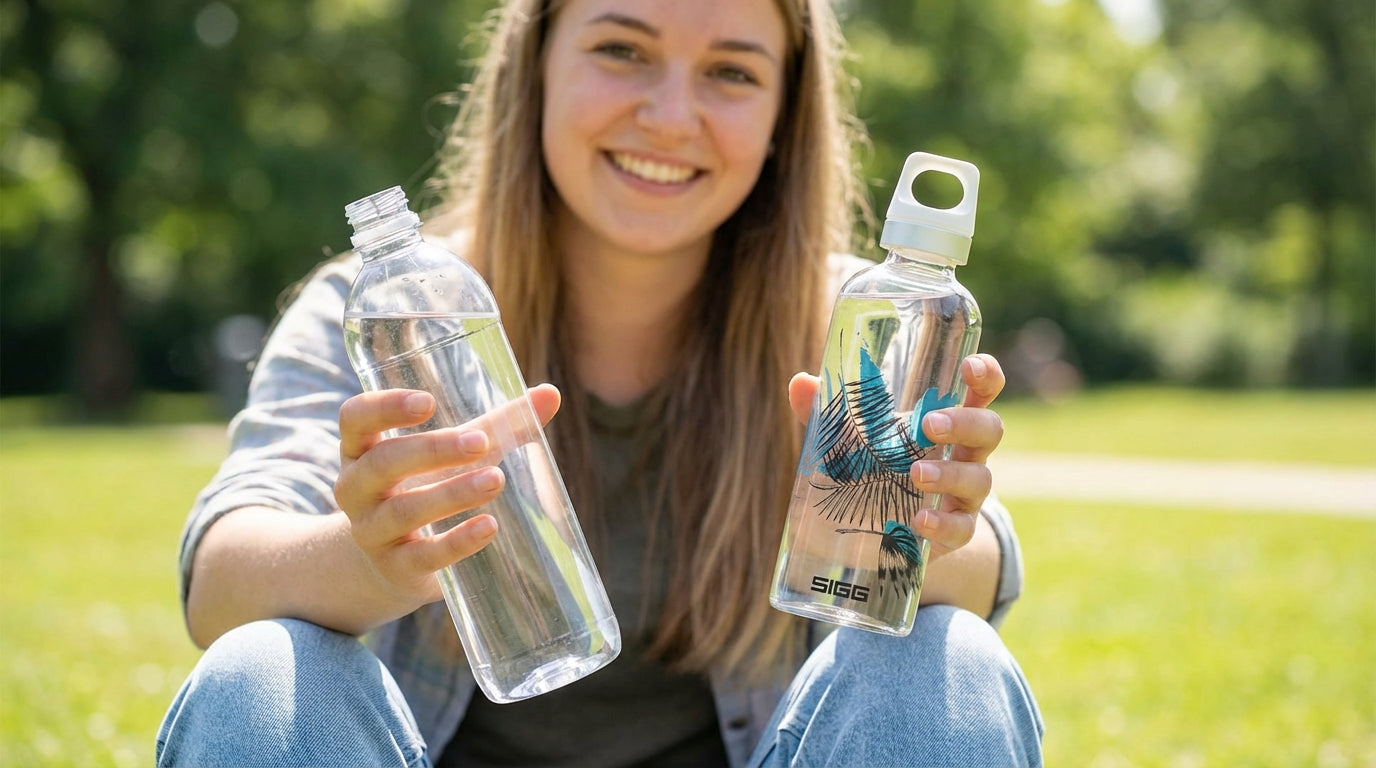
Plastic water bottles are widely used but require special attention. It is crucial that they are BPA-free and free of harmful substances. Low-quality plastics can release substances or absorb odors when exposed to heat, UV radiation, or mechanical wear. Additionally, scratches create microscopic surfaces where germs can more easily settle.
Plastic can be practical in everyday life, for example due to its light weight, but it should be checked regularly and replaced when worn. For long-term use with high hygiene standards, more robust materials clearly have the advantage.
Glass – neutral in terms of health, limited in practicality
Glass is chemically inert and tasteless. Glass water bottles do not leach any substances into beverages and are harmless from a purely health perspective. In everyday life, however, glass has clear weaknesses. It is heavy, prone to breaking, and only suitable for children or on-the-go use to a limited extent. For stationary use at home, glass can be a good solution; for mobile situations, stainless steel and aluminum are significantly more practical.
The healthiest water bottle is the one you use
Studies on drinking habits clearly show: people drink more when drinking is easy. A water bottle only has a positive effect on health if it is used regularly. If it’s too heavy, it gets left behind. If it’s complicated to open, it gets avoided. If it leaks, it loses its place in daily life.
A well-designed water bottle reduces these hurdles. It fits comfortably in the hand, is leak-proof, easy to clean, and intuitive to use. This is exactly what promotes consistent hydration—and that is crucial for concentration, performance, and metabolism.
By the way: How to encourage your child to drink
What to look for when buying
A healthy water bottle is free of harmful substances, tasteless, and designed for daily use. It withstands mechanical stress, can be cleaned hygienically, and remains functional even after years of use. A long service life is not only sustainable but also beneficial to health, as it avoids the need to replace materials and prevents a loss of quality.
Hygiene: often underestimated, but crucial
Hygiene is a crucial factor in the health benefits of a water bottle. Residues, moisture, and heat create ideal conditions for germs. That’s why a water bottle should be rinsed daily and thoroughly cleaned regularly. The lid deserves special attention, as deposits often form there.
Stainless steel and aluminum offer clear advantages here. They hardly absorb odors, can be completely cleaned, and retain their material properties even with frequent washing.
Which water bottle is healthiest for children?
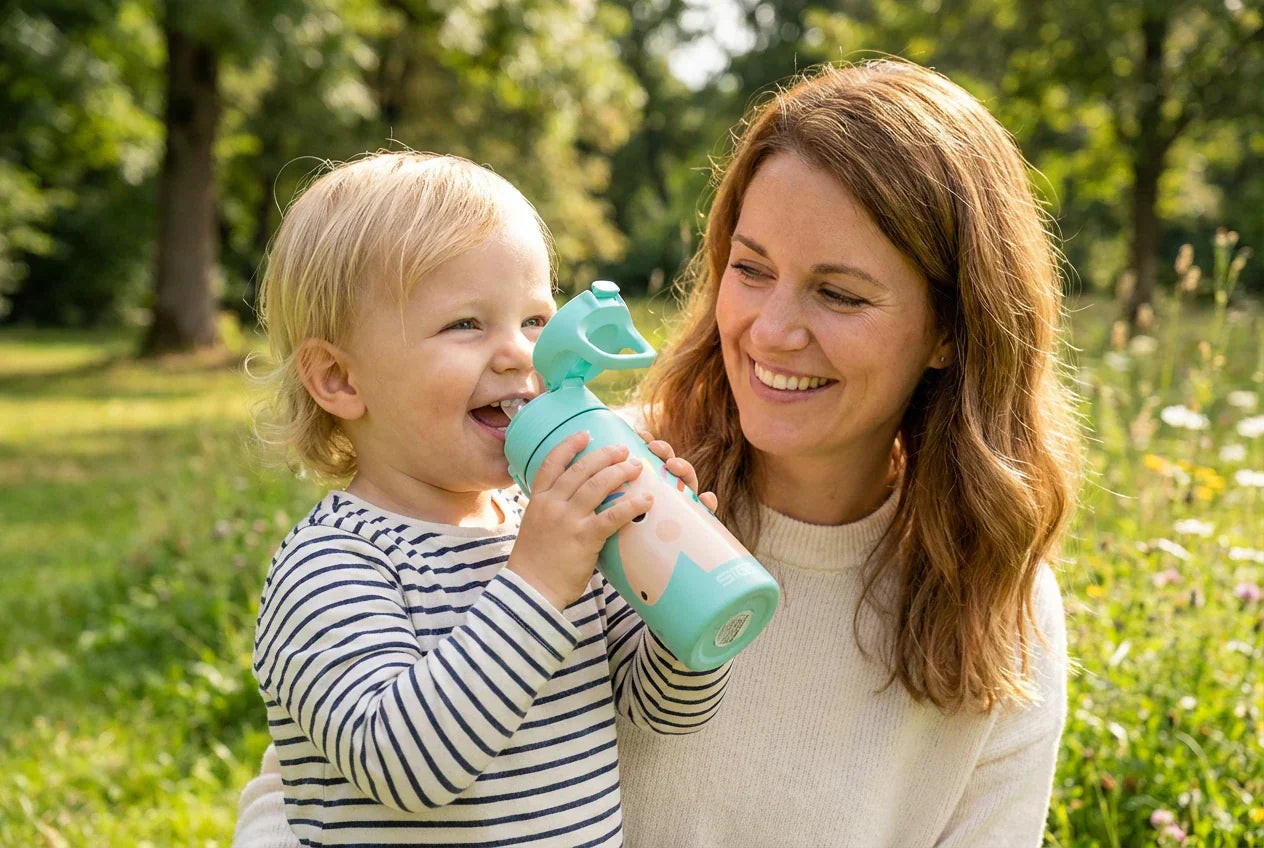
Children have specific requirements for water bottles. They need something lightweight, easy to use, and highly durable. At the same time, the design strongly influences drinking habits. Children drink measurably more when they like their water bottle and were allowed to choose it themselves.
Colors, motifs, or familiar designs are therefore not just superficial factors, but actively support hydration. A high-quality, toxin-free water bottle that children enjoy using promotes healthy drinking habits in the long term and without any pressure.
In short
The healthiest water bottle combines safe materials, high functionality, and suitability for everyday use. Stainless steel and high-quality coated aluminum are among the best options for long-term healthy hydration. Plastic can be a good choice if it is free of harmful substances and is replaced regularly. It’s not just the material that matters, but daily use. A water bottle that reliably accompanies you and doesn’t restrict you forms the foundation for healthy hydration—day after day, year after year.