


Why do drinks taste better from glass bottles than from plastic bottles?
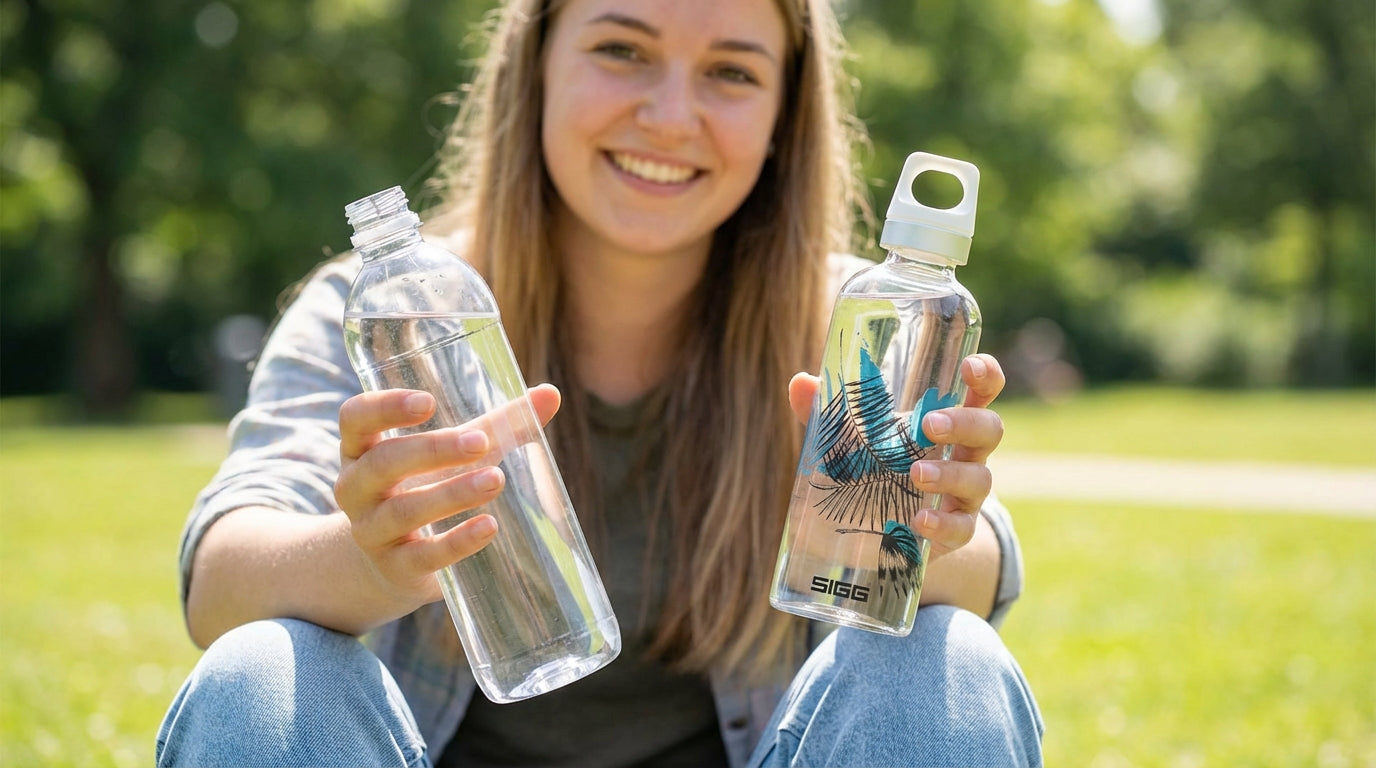
Many people are familiar with the sensation: water from a glass bottle tastes fresher, clearer, and more neutral than water from a plastic bottle. This is no coincidence; rather, it can be easily explained in physical, chemical, and sensory terms. The difference lies not in the beverage itself, but in the material the bottle is made of—and in the way that material interacts with the contents.
Let’s take a look at the question “Why do drinks from glass bottles taste better?”
Taste starts with the material
Taste is sensitive. Even the slightest changes in the beverage are enough for us to perceive a difference. The material of the drinking bottle plays a decisive role here, as it is in constant contact with the contents. The more stable and pure this material is, the more unchanged the taste remains.
Glass is chemically inert
Glass is a so-called chemically inert material. This means it does not react with liquids. It does not release any substances, does not absorb any flavors, and does not alter the smell or taste of the beverage. Water from glass therefore tastes exactly as it is: neutral, fresh, and unadulterated. Even acidic beverages or carbonated mineral water retain their original taste.
From a sensory perspective, this property makes glass the benchmark material when it comes to unaltered taste.
Plastic is porous—and retains odors
Plastic behaves completely differently. Even high-quality plastics have a microscopically porous structure. These fine pores can absorb odors and flavor compounds and release them later. This is exactly why plastic bottles often smell like the last drink—and exactly why water sometimes tastes slightly “like plastic.”
In addition, plastic reacts to external influences. Heat, UV radiation, or mechanical wear can cause changes in odor and taste to intensify. Even BPA-free plastic can be noticeable to the senses, even if it is harmless to health.
Smell influences taste
What we perceive as taste is largely determined by our sense of smell. Even minimal foreign odors alter the sensory perception of a beverage. Plastic bottles often emit a slight odor of their own, which is unconsciously consumed along with the drink. Glass, on the other hand, is odorless. The beverage smells of nothing other than itself—and that is exactly why it tastes better.
Why stainless steel and aluminum are closer to glass
Stainless steel is also among the materials that are flavor-neutral. High-quality stainless steel does not react with beverages and does not absorb flavors. That is why many people find beverages from stainless steel water bottles to be just as neutral as those from glass.
Aluminum achieves this neutrality through a high-quality interior coating. With brands like SIGG, a specially developed, food-safe seal prevents the beverage from coming into contact with the metal. This keeps the taste consistent, even with carbonation or fruit acids.
Why glass isn’t always the best choice
As clear as the advantages of glass bottles are in terms of taste, their limitations in everyday life are just as obvious. For children or on the go, glass may not be the first choice. On the playground or in a backpack, glass quickly reaches its practical limits.
That’s why many people opt for alternatives like stainless steel or high-quality coated aluminum, which come close to glass in terms of taste but are significantly more durable and lighter.
Plastic doesn’t always alter the taste—but it often does
Not every plastic bottle immediately alters the taste. New, high-quality plastic bottles may seem neutral at first. Over time, however, many plastic bottles absorb odors, develop a taste of their own, or react sensitively to heat. It is precisely this gradual effect that often makes drinks from plastic taste less fresh in the long run.
Is it healthier to drink from glass bottles?
Glass and stainless steel water bottles are considered particularly safe when it comes to the potential leaching of chemicals or microplastics. At the same time, they offer many practical advantages: They are very easy and hygienic to clean, can withstand boiling water, and can be safely washed in the dishwasher. Additionally, they preserve the original taste of your beverages without absorbing or releasing flavors.
Conclusion
Drinks taste better from glass bottles because glass is flavorless and odorless and does not release any substances into the contents. Plastic can absorb flavors, retain odors, and release them again—even if it is harmless to health. Stainless steel and high-quality coated aluminum offer a practical alternative for everyday use that comes very close to glass in terms of taste.
If you value unadulterated flavor, pay attention to the material. Because it’s not the drink that makes the difference, but what you drink it from.


