How to Clean a Stainless Steel Lunchbox Hygienically – The Best Tips for Perfect Cleanliness
A stainless steel lunchbox is a practical everyday companion, but cleaning it requires special attention to ensure hygiene and extend its lifespan. Food residue can become stubbornly embedded and, if not properly cleaned, can lead to unpleasant odors or even the growth of bacteria. Thorough cleaning is therefore essential.
Many users underestimate the impact of cleaning products and methods on the material. The wrong products or abrasive sponges can damage the surface, increasing susceptibility to corrosion and making future cleaning more difficult. This not only affects the appearance but also the functional integrity of the box.
This article highlights effective cleaning strategies specifically tailored to stainless steel lunchboxes. It presents tried-and-true home remedies and special care tips to keep the lunchbox not only clean but also durable and hygienic. This ensures the lunchbox remains a reliable companion for healthy meals on the go.
A stainless steel lunchbox can be cleaned hygienically by removing food residue after each use, washing it with warm water and dish soap, and, if necessary, using household remedies such as vinegar or baking soda to effectively eliminate odors and discoloration while preserving the material’s integrity.
In a nutshell
- Regular cleaning prevents stubborn residue and bacterial growth.
- Mild dish soap and soft brushes protect the stainless steel surface.
- Vinegar and baking soda are effective household remedies for odors and limescale buildup.
- Drying after cleaning prevents water spots and corrosion.
What cleaning products are suitable for stainless steel?
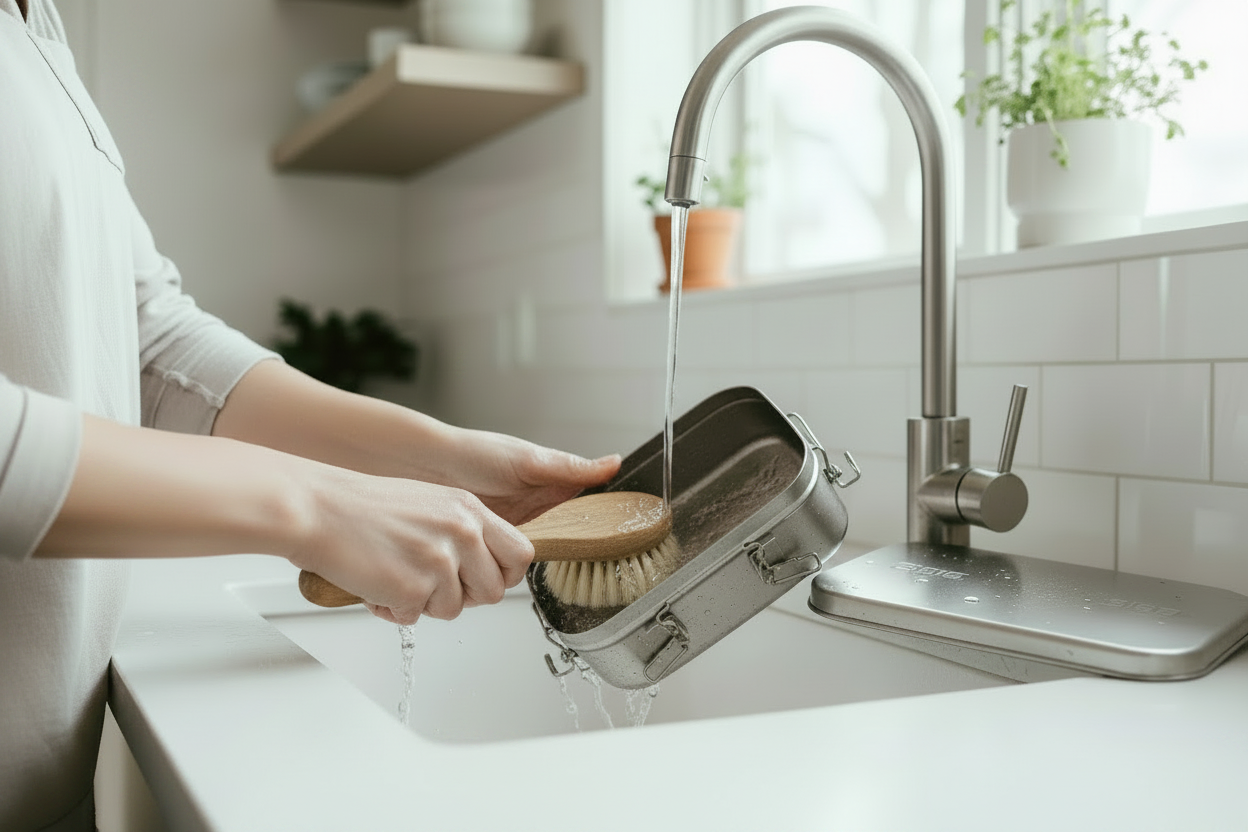
Mild dish soap and warm water are best for the daily cleaning of a stainless steel lunchbox, as they effectively remove food residue without damaging the surface of the material.
Harsh chemicals or abrasive cleaners can damage the stainless steel’s protective passive layer, which can lead to corrosion and unsightly stains. A pH-neutral dish soap is the best choice here.
For stubborn stains or discoloration—such as those caused by tomato sauce or turmeric—home remedies prove to be extremely effective. A 1:1 mixture of water and vinegar can work wonders here. Baking soda, mixed into a paste, also removes discoloration without scratching.
Choosing the right tools is also crucial. Soft sponges, microfiber cloths, or special cleaning brushes for bottles and containers are ideal. Metal brushes or steel wool should be strictly avoided, as they cause fine scratches where bacteria can accumulate.
Some manufacturers also offer special stainless steel cleaners, which often contain a combination of mild surfactants and conditioning agents. These products are designed to clean the surface while maintaining its shine.
It is advisable to follow the lunchbox manufacturer’s cleaning instructions, as some models have special coatings or seals that require specific care. This ensures the product’s longevity and functionality.
In short
Mild dish soap, vinegar, baking soda, and soft cleaning tools are ideal for caring for stainless steel lunchboxes.
How do you remove stubborn odors from a lunchbox?
Stubborn odors in a stainless steel lunchbox can be effectively neutralized with baking soda or vinegar, as these substances bind the acids and bases responsible for the odors.
A tried-and-true method is to put two to three tablespoons of baking soda into the lunchbox, add a little water to form a paste, and let it sit overnight. Baking soda, also known as sodium bicarbonate, absorbs odor molecules.
Alternatively, you can fill the box with a mixture of equal parts water and white vinegar. Acetic acid, the main component of vinegar, acts as a natural disinfectant and odor neutralizer. Rinse thoroughly after letting it sit for a few hours.
Another method is to line the box with crumpled newspaper overnight. The porous structure of the paper can absorb odors—a technique also used for refrigerators. This is a simple and cost-effective approach.
Sometimes, drying the box in the fresh air and in direct sunlight also helps. UV radiation has an antibacterial effect and can eliminate residual odors. The box should be left completely open to ensure optimal ventilation.
Regular cleaning and thorough drying after each use prevent odors from developing. A clean box that isn’t sealed while damp provides fewer opportunities for bacteria to multiply.
Practical Tip
To prevent odors, always let the lunchbox air dry with the lid fully open after washing before closing it again. A small bag of coffee grounds can also help during extended storage.
What brushes and sponges are suitable for cleaning?
Soft brushes and sponges are ideal for cleaning stainless steel lunchboxes, as they are gentle on the surface and prevent scratches that could compromise the material’s corrosion resistance.
Microfiber cloths are excellent for wiping and polishing, as the fine fibers effectively absorb dirt particles without leaving streaks. They are also highly absorbent and lint-free.
For hard-to-reach corners and seals, bottle brushes with soft bristles or special cleaning brushes for drinking vessels are ideal. Their shape allows for thorough cleaning even in tight spaces.
Silicone sponges or brushes are a good alternative to conventional sponges, as they are more hygienic, dry faster, and do not cause scratches. Their antibacterial properties are another advantage.
It’s important never to use steel wool, scouring pads with metal fibers, or other abrasive materials. These leave microscopic scratches that not only look unsightly but also make the surface more susceptible to rust.
Even with stubborn buildup, it’s best to avoid using mechanical force and instead let cleaning products or household remedies sit on the surface for longer periods of time. Patience protects the material and preserves the lunchbox’s appearance.
How often should a stainless steel lunchbox be cleaned?
A stainless steel lunchbox should be thoroughly cleaned after each use to prevent the buildup of food residue, bacteria, and odors and to ensure hygiene.
Cleaning immediately minimizes the effort required, as fresh residue is easier to remove than dried-on or caked-on residue. A quick rinse right after eating is often sufficient.
When used for liquid foods such as soups or sauces, particularly thorough cleaning is required. These foods tend to get trapped in seals and corners, creating an ideal breeding ground for microorganisms.
At least once a week, a more thorough cleaning with vinegar or baking soda is recommended to remove limescale and neutralize any odors that may have developed. This deep cleaning helps ensure the product’s longevity.
If the lunchbox is not used for an extended period, it should also be thoroughly cleaned and completely dried before storage. A damp box can lead to mold growth, even with stainless steel.
Although DIN EN ISO 1461 is primarily relevant for hot-dip galvanized coatings, it underscores the importance of surface cleanliness for corrosion resistance. Similar principles apply to the care of stainless steel to preserve its properties.
What role does the gasket play in cleaning?
The seal of a stainless steel lunchbox plays a central role in cleaning, as it is often made of silicone or rubber and is more susceptible to mold growth and odor absorption than the stainless steel body.
Although silicone gaskets are durable and flexible, they can absorb odors and become discolored over time, especially if they are not cleaned regularly and thoroughly. Separate cleaning is often necessary.
It is recommended to remove the gasket after each use and clean it separately. Warm water and mild dish soap are usually sufficient. For stubborn odors, soaking the gasket in a vinegar-water solution can help.
Mold growth is a common problem with gaskets that are not completely dried. Moisture, combined with food residue, creates an ideal environment for mold. Thorough drying is key to preventing this.
Some gaskets are dishwasher-safe, while others are not. The manufacturer’s instructions are crucial. High temperatures and harsh detergents can damage the material and impair its sealing function.
It’s important to regularly check the seal for cracks or porosity. A damaged seal loses its function, leading to leaks and compromising the lunchbox’s hygiene.
Advantages
- Longer lifespan of the lunchbox
- No odor transfer to food
- Prevents bacterial and mold growth
Disadvantages
- Time required for manual cleaning
- Risk of material damage if not cared for properly
- Seals may discolor or become brittle
Can a stainless steel lunchbox go in the dishwasher?
Whether a stainless steel lunchbox is dishwasher-safe depends heavily on the manufacturer’s instructions, as not all models—and especially the gaskets—are suitable for high temperatures and harsh detergents.
Many high-quality stainless steel lunch boxes are generally dishwasher-safe. The stainless steel itself is corrosion-resistant and can withstand the conditions. However, the seals are often the problem.
Silicone gaskets can become brittle, lose elasticity, or discolor with repeated dishwasher use. This compromises the box’s seal and can lead to leaks.
The surface of the box can also become scratched or lose its shine due to harsh detergents and contact with other metals (e.g., cutlery). Hand washing is often gentler.
If the container is dishwasher-safe, it should be placed in the top rack to avoid direct contact with heating elements. The seal should, if possible, be cleaned separately or at least checked regularly.
The DIN EN 10088 standard defines various grades of stainless steel and their properties, including corrosion resistance. High-quality stainless steel, such as 18/8 or 18/10, is more resistant to dishwasher cleaning.
What household remedies are suitable for cleaning stainless steel?
Various household remedies work exceptionally well for cleaning stainless steel lunchboxes, particularly vinegar, baking soda, and citric acid, as they effectively remove limescale, odors, and mild discoloration without damaging the material.
Vinegar, especially white household vinegar, is a versatile cleaning agent. Its acidity dissolves limescale and neutralizes odors. A mixture of equal parts water and vinegar can be used as a soaking solution or for wiping down surfaces.
Baking soda (sodium bicarbonate) is a mild abrasive and odor absorber. A paste made from baking soda and a little water removes stubborn discoloration and encrustations. It is also effective against sour odors.
Citric acid, either as a powder or in the form of lemon juice, is also effective against limescale and light rust stains. It brightens the surface and leaves a fresh scent. However, a concentrated solution should not be left to sit for too long.
Baking powder, which consists mainly of sodium bicarbonate, can also be used in a similar way to baking soda. It helps dissolve stains and neutralize unpleasant odors. Let a thin layer sit overnight.
These home remedies are not only eco-friendly and cost-effective but also gentle on surfaces, as long as they’re used correctly. They offer an effective alternative to chemical cleaners.
Did you know?
Stainless steel develops a passive layer of chromium oxide on its surface that protects the material from corrosion and can regenerate itself if damaged, provided oxygen is present.
How do you remove limescale stains from stainless steel?
Limescale stains on stainless steel lunchboxes are most effectively removed with vinegar or citric acid, as these mild acids break down and dissolve the mineral deposits without damaging the stainless steel surface.
A 1:1 mixture of water and white vinegar is a tried-and-true method. You can wipe the affected areas with this solution or soak the entire lunchbox for about 30 minutes. Then rinse thoroughly.
Alternatively, you can use a solution of citric acid powder and water. One teaspoon of citric acid per 250 ml of water is often sufficient. Apply this solution to the limescale stains, let it sit briefly, and then wipe it off with a soft cloth.
For very stubborn limescale deposits, you can use a paste made from baking soda and a little vinegar. Apply this mixture to the stains, let it sit for a few minutes, and then gently scrub it off.
It’s important to always rinse the lunchbox thoroughly with clean water after using acids or bases to remove any residue that could otherwise damage the stainless steel surface over time.
Drying it afterward with a microfiber cloth prevents new water spots and ensures a streak-free shine. This is the perfect way to finish the cleaning process.
Good to Know
Stainless steel is an alloy containing at least 10.5% chromium, which creates a protective passive layer that shields the material from corrosion.
What to Do About Rust Stains on Stainless Steel?
Rust spots on stainless steel lunchboxes—often referred to as “surface rust”—can usually be removed with citric acid or special stainless steel cleaners, as these chemically dissolve the iron oxides without damaging the surrounding material.
Surface rust is usually caused by contact with other rusting metal objects, such as in the dishwasher. It is a surface phenomenon and not a sign of material failure in the stainless steel itself.
A paste made from citric acid powder and a little water can be applied directly to the rust spot. After letting it sit for 15 to 30 minutes, gently rub the spot with a soft cloth and rinse thoroughly.
Specialized stainless steel cleaners, which often contain oxalic acid or other mild acids, are also effective. These products are designed to protect the stainless steel’s passive layer and restore its shine.
After removing the rust, it’s important to thoroughly clean and dry the surface. A final polish with a microfiber cloth can help regenerate the passive layer and prevent new surface rust from forming.
To prevent surface rust, stainless steel products should not be washed in the dishwasher together with items that rust. It is advisable to wash them separately or to remove rusty parts before running the dishwasher.
How do you care for a stainless steel lunchbox to ensure its longevity?
To ensure the long-term durability of a stainless steel lunchbox, a combination of regular cleaning, thorough drying, and gentle handling is essential to preserve the material’s integrity and hygiene.
The box should be cleaned immediately after each use to prevent food residue from drying onto the surface. Warm water and a mild dish soap are sufficient for this and gentle on the material.
One aspect that is often overlooked is ensuring the box is completely dry. Moisture left inside the sealed box can lead to mold growth or unpleasant odors, even with stainless steel.
The seals should be checked regularly for elasticity and integrity. Brittle or damaged seals compromise leak-proof performance and should be replaced as needed.
Best to avoid: contact with sharp or pointed objects that could scratch the surface. Such scratches are not only unsightly but can also reduce corrosion resistance.
The lunchbox should always be stored in a dry and well-ventilated place, ideally with the lid open so that air can circulate. This prevents moisture buildup and the development of odors.
Which option is right for you?
Daily Cleaning – Brief Description
For anyone who uses the box daily and wants a quick, hassle-free cleaning routine.
Weekly Deep Cleaning – Brief Description
Recommended for stubborn odors or stains to ensure the box’s longevity.
Why is drying after cleaning so important?
Thoroughly drying a stainless steel lunchbox after cleaning is crucial to prevent water spots, limescale buildup, and, most importantly, the growth of bacteria and mold.
Residual moisture provides an ideal environment for microorganisms to multiply, even on the smooth surface of stainless steel. This can lead to unhygienic conditions and unpleasant odors.
Water spots caused by the evaporation of hard water are harmless but unsightly. They can be prevented by immediately drying the box with a microfiber cloth.
A damp container that is stored while closed often develops a musty odor that can transfer to subsequent meals. Allowing it to air dry completely is the best way to prevent this.
The gaskets are particularly prone to moisture problems. They should be dried separately and only reinserted once they are completely dry to prevent mold growth in the folds.
The humidity in the storage area also plays a role. A dry environment promotes quick drying and protects the lunchbox from unwanted buildup over the long term.
Checklist
- Remove food residue immediately
- Use mild dish soap and soft sponges
- Clean and dry the gaskets separately
- Dry thoroughly after each wash
- Use vinegar or baking soda to eliminate odors if necessary
What mistakes should you avoid when cleaning?
When cleaning a stainless steel lunchbox, it’s essential to avoid abrasive scouring agents, steel wool, and chlorine-based cleaners, as these can damage the surface and reduce the material’s corrosion resistance.
Using sharp objects such as knives or wire brushes to remove encrustations is also counterproductive; they leave scratches in which dirt and bacteria can more easily accumulate.
A common mistake is failing to dry the box after washing. This leads to unsightly water spots and promotes the growth of germs, especially if the box is closed while still damp.
Ignoring the gaskets is also a problem. If they are not regularly removed and cleaned, mold and odors can accumulate there, contaminating the entire box.
Soaking the box overnight in very harsh solutions—especially those containing highly acidic cleaners—can damage the passive layer of the stainless steel. Mild household cleaners are the better choice here.
Failure to follow the manufacturer’s instructions regarding dishwasher safety or specific care guidelines often leads to unnecessary damage and a shorter product lifespan.
Final Recommendations for Stainless Steel Care
Hygienic cleaning of a stainless steel lunchbox is a crucial factor for its longevity and the safety of the food transported in it. Consistent care after each use protects the material and prevents problems.
It is recommended to always use mild detergents and soft cleaning tools. Harsh chemicals or abrasive materials can irreparably damage the protective surface of the stainless steel, increasing its susceptibility to corrosion.
Special attention should be paid to the gaskets. Regular removal and cleaning prevent the buildup of mold and odors that could otherwise affect the entire lunchbox. Thorough drying is essential here.
Investing in a high-quality stainless steel lunchbox pays off in the long run when combined with proper care. This ensures it remains a hygienic and reliable companion for many years to come.